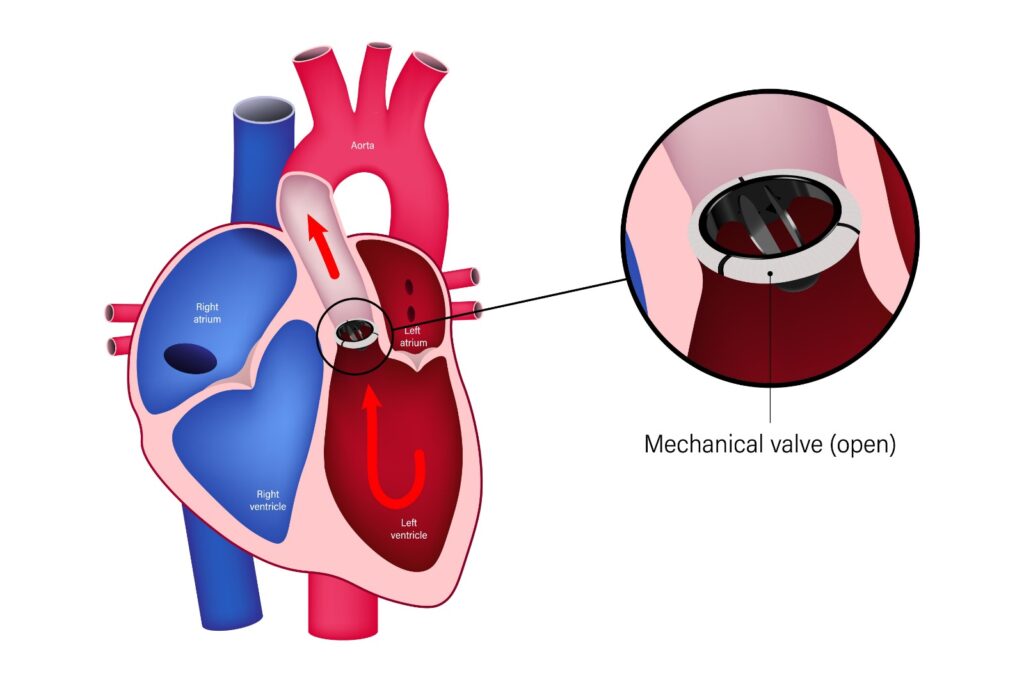
Heart Valve Replacements
Heart Valve Replacement is a life-saving surgical procedure used to treat damaged or diseased heart valves. The heart has four valves — aortic, mitral, tricuspid, and pulmonary — that control blood flow through the heart’s chambers in such a way that blood flows on one direction only. When one or more valves fail to open or close properly, causing obstruction to forward flow or allowing flow of blood in reverse direction, it disrupts circulation and strains the heart. Valve replacement surgery restores normal blood flow, allowing the heart to function efficiently again.
Why Is Heart Valve Replacement Needed?
Valve replacement becomes necessary when valves are too narrow (stenosis) or leak (regurgitation). These conditions prevent the heart from pumping blood effectively. Common causes include congenital defects, aging, rheumatic fever, endocarditis, or calcium buildup. Symptoms such as chest pain, fatigue, shortness of breath, or swelling in the legs often indicate the need for surgical intervention.
Types of Heart Valve Replacements
Heart valves are traditionally of two types.
Mechanical Valves (also called Metallic Valves): Mechanical valves are made from highly durable materials like titanium or pyrolytic carbon. They generally last a lifetime but require lifelong anticoagulation (blood thinning medications, usually warfarin) to prevent blood clots. Regular INR monitoring is essential to maintain a safe and effective blood-thinning level. Due to their longevity and lack of need for a second operation they are the preferred valves for replacement in young and active individuals (see below for more details).
Biological Valves (also called Tissue Valves): These valves are made from animal tissue, usually from pigs or cows, or from donated human tissue. They don’t require lifelong anticoagulants but they degenerate with time and may need a second operation for re-replacement after 10 to 20 years. Since they require a second operation for replacement after few years, they are more preferred valves in older individuals (see below for more details). A third type of heart valve has been developed over the last few years, which is a significant modification of the tissue valves or biological valve.
Transcatheter Valve (TAVR): A minimally invasive option for patients who are not fit for open-heart surgery. The valve is implanted using a catheter through a small incision, usually in the groin. Basically, being a tissue valve these valves are primarily used for older individuals and those individuals who are too sick to survive an open-heart operation.
How Heart Valve Replacement Surgery Is Performed
The procedure can be done as traditional open-heart surgery or through minimally invasive open-heart surgery. During open-heart surgery, the patient is placed under general anesthesia. Traditional open-heart surgery is performed by cutting open the breastbone (sternum) whereas in minimally invasive approaches much smaller incisions are made in between the ribs either on the front or on the left side of the chest wall to reach the heart (see our section on minimally invasive cardiac surgery for more details on this). In both the methods, during the operation, patient is attached to an advanced machine called heart lung machine, which performs the function of the heart and lungs for the duration of the surgery, allowing the heart to be stopped for the procedure. Once heart is stopped the surgeon cuts open the respective chamber of the heart and removes the damaged valve and replaces it with a mechanical or a tissue valve. Once done, the chamber of the heart is closed, heart is made to beat again and patient is separated from the heart lung machine.
Trans catheter procedures are not open-heart operations, and they are typically performed inside a Cath lab where artificial valves are introduced in the heart through specially designed catheters and wires by a small cut blood vessels in the groin without removing the old diseased valve (for more details see the section on TAVI)
The method chosen depends on the patient’s health, age, the valve affected and multiple other factors.
If you are about to undergo a valve replacement operation you should discuss various option with your surgeon in detail and take an informed decision about the right choice of valve
Benefits of Heart Valve Replacement
Heart valve replacement dramatically improves heart function and overall quality of life.
Improved blood flow and oxygen delivery throughout the body
Relief from symptoms like breathlessness, fatigue, and chest discomfort
Reduced risk of heart failure and other serious complications
Enhanced energy levels and improved daily activity performance.
With advanced surgical techniques, the survival rate and long-term outcomes for patients undergoing valve replacement have improved significantly.
Recovery After Heart Valve Replacement
Recovery varies based on the type of surgery performed. Hospital stays typically last between 5 to 10 days. Most patients return to normal activities within 6 to 8 weeks. Participation in a cardiac rehabilitation program is highly recommended. It helps strengthen the heart, build stamina, and promote emotional well-being. Regular follow-ups and lifestyle modifications—such as eating healthy, quitting smoking, and managing stress—ensure long-term success.
Risks and Complications
Although valve replacement is highly successful, potential risks exist. These include bleeding, infection, irregular heartbeat, or blood clots. Patients with mechanical valves must maintain strict anticoagulation management. However, with proper medical supervision and adherence to post-surgery care, most patients lead healthy, active lives after recovery
Choosing Between Mechanical and Biological Valves
Biological (or tissue) Valves are made from animal tissue, such as bovine (cow) or porcine (pig) pericardium. They usually do not require long-term anticoagulation. However, they may wear out over time — though modern bioprosthetic valves can now last 15–25 years due to improved preservation and processing techniques. Mechanical valves usually last for a lifetime but require life-long anticoagulation (blood thinning agents)
The decision depends on several factors—age, lifestyle, medical history, and personal preference. Younger patients often opt for mechanical valves for their longevity, while older patients may prefer biological valves to avoid lifelong medication. Your cardiologist and surgeon will guide you in choosing the most suitable option for your condition.

MBBS, MS, MCh, FRCS-CTh,
FRCS-CTh(Ed), MEBCTS, FEBCTS, FACS(USA), DNB, MNAMS, MBA
Senior Consultant – Cardiothoracic & Vascular Surgery
National Heart Institute, New Delhi
Frequently Asked Questions
What is Heart Valve Replacement?
It is a surgery in which a damaged heart valve is removed and replaced with either a mechanical valve or a biological (tissue) valve to restore normal blood flow.
Why is valve replacement needed?
Replacement is required when the valve becomes:
Narrow (stenosis)
Leaky (regurgitation)
Or both
These cause breathlessness, fatigue, swelling, and can lead to heart failure if untreated.
What types of valves are used?
Two main types:
Mechanical valves: Long-lasting, require lifelong blood-thinning tablets.
Biological valves: Made from human/animal tissue; don’t need lifelong blood-thinners but last 10–20 years.
Which valve is better for me?
It depends on:
Your age
Lifestyle
Desire/ability to take blood thinners
Pregnancy plans
Any other medical conditions
Your surgeon helps choose the safest option.
How is the surgery done?
Valve replacement can be performed via:
Conventional open-heart surgery
Minimally invasive surgery
Robotic-assisted surgery (in selected cases)
How long is the recovery?
General recovery timeline:
Hospital stay: 4–6 days
Full recovery: 6–8 weeks
Minimally invasive/robotic surgeries may allow faster recovery.
Will I need blood-thinning medicines after surgery?
Mechanical valves: Lifelong blood thinners (Warfarin).
Biological valves: Usually only short-term blood thinners.
How long do replacement valves last?
Mechanical: 20–30+ years (often lifelong)
Biological: 10–20 years depending on age and lifestyle
Is pregnancy safe after valve replacement?
Yes, especially with biological valves (preferred for women planning pregnancy).
Mechanical valves require careful monitoring.
What activities can I do after surgery?
Most patients can resume:
Walking within days
Light activity within 2–3 weeks
Driving after 3–4 weeks
Full routine by 6–8 weeks
Your doctor will give personalised advice.
For any queries on this topic
Mail to: drkeshriheartcare@gmail.com or Click Here For WhatsApp (Text msg Only):