Acyanotic Heart Disease
What Is Acyanotic Heart Disease?
Acyanotic Heart Disease refers to birth-defects in the heart where structural abnormalities cause increased blood flow to the lungs. In these defects, oxygen-rich and oxygen-poor blood do not mix significantly, which is why the patient does not develop bluish discoloration (cyanosis). These conditions may also cause obstruction to blood flow, but the oxygen level in the bloodstream generally remains normal.
In simple terms, Acyanotic Heart Diseases are structural problems in the heart that alter the direction or amount of blood flow without reducing the oxygen saturation in the blood. They are typically diagnosed during infancy or childhood, although some may be detected in adulthood.
What Are Common Acyanotic Heart Diseases?
Acyanotic Congenital Heart Diseases fall into two major groups:
A) Left-to-Right Shunt Lesions – commonly called “Hole-in-Heart”
In these conditions, there is a connection between:
the left side of the heart (carrying oxygen-rich blood), and
the right side of the heart (carrying oxygen-poor blood).
Because the pressure is higher on the left side, blood flows abnormally from left to right, causing excessive blood flow to the lungs.
Common examples include:
Atrial Septal Defect (ASD) – A connection between the upper chambers (atria) of the heart
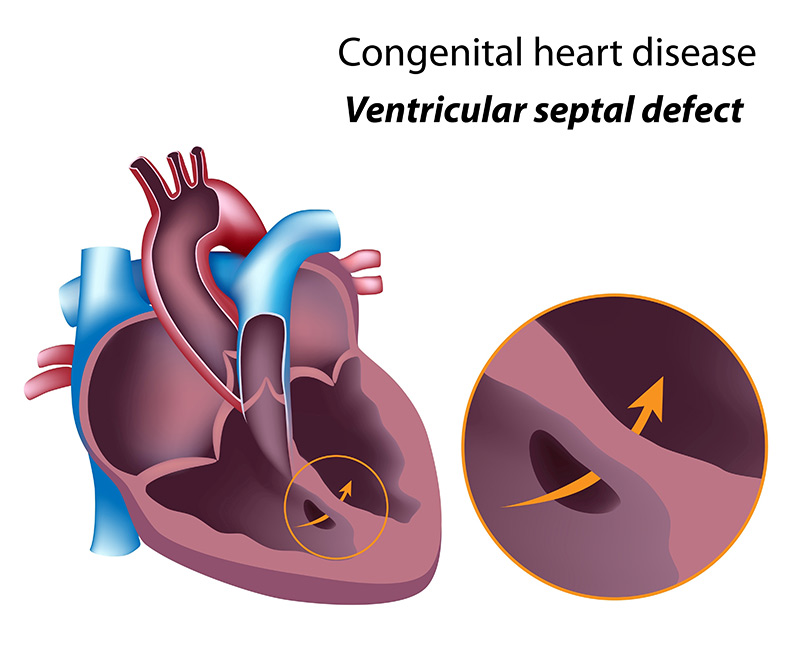
Ventricular Septal Defect (VSD) – A connection between the lower chambers (ventricles) of the heart
Patent Ductus Arteriosus (PDA) – A persistent connection between the major blood vessels arising from the left and right sides of the heart
B) Obstructive Lesions
In these conditions, a heart valve or major blood vessel becomes narrowed, either on the left or right side of the heart, making it difficult for the heart to pump blood effectively.
Common examples include:
Pulmonary Stenosis Narrowing of the pulmonary valve restricts blood flow from the heart to the lungs.
Aortic Stenosis Narrowing of the aortic valve obstructs blood flow from the left ventricle to the body.
Coarctation of the Aorta A segment of the aorta becomes narrowed, causing high blood pressure before the narrowing and reduced blood flow beyond it.
What Are Common Symptoms of Acyanotic Congenital Heart Disease?
The most common symptoms include: (Also see FAQs and the relevant video on our YouTube https://youtu.be/vXWXST0tVlE?si=v3qXTJzeIz4bxEyN
Repeated chest infections — cough, cold, pneumonia
Frequent respiratory infections
Poor feeding or difficulty breastfeeding
Sweating while feeding
Rapid breathing or breathlessness
Fast heart rate felt by parents
Inadequate weight gain in infants
Fatigue or tiring easily during play
A heart murmur heard during examination
Absence of bluish discoloration (cyanosis)
How Are Acyanotic Heart Diseases Diagnosed?
In addition to detailed evaluation of symptoms and a specialized clinical examination, the diagnosis requires a combination of tests:
Chest X-ray
Electrocardiogram (ECG)
Echocardiography (ECHO) – the most important and most commonly performed test
CT or MRI (in selected cases)
Cardiac catheterization (in selected cases)
How Are Acyanotic Heart Diseases Treated?
There are multiple treatment options:
Medications
The role of medications is limited to:Controlling symptoms
Preparing the child for an Open-Heart Surgery or catheter-based intervention
Supporting recovery after surgery or intervention
Medications alone very rarely cure Acyanotic Congenital Heart Diseases.
Catheter-Based Interventions (e.g., ASD, VSD, PDA device closure)
Specialized wires and devices are passed from the blood vessels in the groin to the heart to close the defect.
This procedure does not require Open-Heart Surgery.
Some children are suitable for catheter-based treatment, while others are not.
A specialist evaluates the child using ECHO and other tests to decide suitability.
In suitable cases, catheter-based closure is often the preferred treatment option.
Surgery – Open-Heart Surgery
Open-heart surgery is often required in cases of:Larger defects
Complicated lesions
Delayed diagnosis
Large VSDs
Unfavorable ASD anatomy
Severe valve stenosis
Coarctation not suitable for ballooning
Complex defects
Defects which cannot be treated with catheter-based interventions
A specialist evaluates the child using ECHO and other tests to determine whether surgery is necessary.
Regular Follow-Up with a Pediatric or Adult Congenital Heart Specialist
Follow-up is especially important when:You have been told that the “hole” does not require treatment or surgery at present
There is uncertainty regarding the diagnosis
The child has undergone surgery or catheter-based intervention
What Happens if Acyanotic Heart Defects Are Left Untreated?
Without timely treatment, several complications may occur:
Pulmonary hypertension
Enlargement of the heart
Leakage of heart valves
Heart failure
Arrhythmias
Growth delay
Recurrent chest infections
Eisenmenger syndrome (a rare but serious complication of long-standing large shunt lesions)
Disease becomes incurable
In simple words, delayed treatment may lead to:
Disease becoming more advanced
Development of complications
Damage to other heart structures (e.g., leakage of previously normal valves)
Heart enlargement or heart failure
Adverse effects on other organs (lungs, circulation, infection risk)
The disease becoming more difficult to treat
The disease becoming incurable (Eisenmenger Syndrome)
Early treatment prevents almost all long-term complications.
What Is the Long-Term Outlook & Prognosis?
With timely and appropriate treatment:
Most children lead normal lives
They can attend school, play sports, and grow normally
Life expectancy is nearly normal
Many defects require no long-term medications
Adults with repaired defects generally live full, healthy lives
Late diagnosis or delayed treatment may affect long-term outcomes; therefore early evaluation is essential.
Additional Information for Parents & Caregivers
Small defects may close on their own.
Large defects will not close spontaneously and require treatment.
Most Acyanotic defects are treatable, and almost all children live normal lives with timely care.
Untreated large defects can lead to increased lung pressure, arrhythmias, and heart failure.
Growth, feeding, and developmental milestones must be monitored.
After surgery or device closure, recovery is usually quick, with few long-term restrictions.
Can Acyanotic Heart Disease Be Prevented?
Although congenital defects cannot always be prevented, risk can be reduced by:
Good maternal nutrition
Avoiding alcohol, smoking, and certain medications during pregnancy
Controlling maternal diabetes
Taking folic acid before and during pregnancy
Early prenatal care
Vaccination against rubella before pregnancy
When Should You Consult a Doctor Urgently?
Seek medical attention if a child has:
Very fast breathing
Poor feeding or refusal to feed
Excessive sweating
Poor weight gain
Repeated chest infections
Unusual tiredness or fainting
A very loud heart murmur

MBBS, MS, MCh, FRCS-CTh,
FRCS-CTh(Ed), MEBCTS, FEBCTS, FACS(USA), DNB, MNAMS, MBA
Senior Consultant – Cardiothoracic & Vascular Surgery
National Heart Institute, New Delhi
Frequently Asked Questions
Is surgery always needed?
No. Many small defects close on their own or can be treated by catheter-based procedures.
Regular follow-up with a specialist is essential when surgery is not advised.
Can my child live a normal life?
Yes. Most treated children grow up with normal activity levels and life expectancy.
Is long-term follow-up required?
Yes. Periodic check-ups ensure the repair remains effective
Will my child need lifelong medication?
Usually, no. Medications are typically temporary.
Will my child need further operations in future?
Not in general. In most cases, one operation or catheter-based procedure is enough, and children go on to live normal, active lives.
However, a few children may need further procedures later in life. This depends on:
The type of congenital heart defect
The complexity of the defect
The age at which the first treatment was done
How the heart and valves change as the child grows
Regular follow-up with a congenital heart specialist ensures that any future requirement is identified early and managed effectively.
Can these defects be detected during pregnancy?
Yes. Many congenital defects are detected through fetal echocardiography at 18–22 weeks.
Are these defects hereditary?
Most cases occur sporadically. However, genetic counselling is recommended in families with multiple congenital heart defects.
If I was told the “hole” will close by itself, why do I still need follow-up?
Because follow-up ensures that:
The hole has actually closed
It has closedcompletely
It has not created new problems
Some defects close in a way that may pull nearby valves (especially the aortic valve), causing leakage — a more serious issue
For any queries on this topic
Mail to: drkeshriheartcare@gmail.com or Click Here For WhatsApp (Text msg Only):