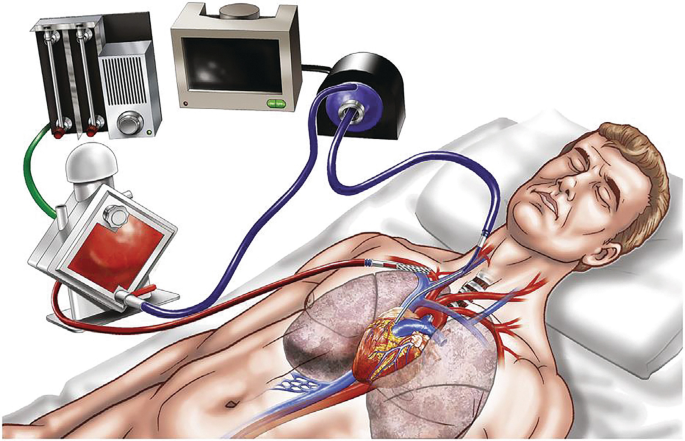
ECMO
Extracorporeal Membrane Oxygenation (एक्मो (ECMO)) is a highly advanced life-support treatment used when a patient’s heart or lungs become so weak that they can no longer function properly even with the best possible medicines, ventilators, or life-support machines.
You can think of एक्मो (ECMO) as a temporary artificial heart and artificial lung. It takes over the work of these organs from outside the body, giving them time to rest, heal, and recover. In many cases, एक्मो (ECMO) also buys time until the patient becomes fit for a major heart/lung surgery or even an organ transplant. Sometimes एक्मो (ECMO) is also used to support the heart after an open heart operation till it gains power to support the circulation of the body.
एक्मो (ECMO) continuously oxygenates the blood and removes carbon dioxide—just like healthy heart and lungs do—helping protect vital organs during critical illness.
How Does ECMO Work?
To understand एक्मो (ECMO), imagine a simple loop:
Blood is taken out of the body using soft tubes (cannulas).
It enters an external oxygenator that works like an artificial lung, removing carbon dioxide and adding fresh oxygen.
The oxygen-rich blood is then pumped back into the patient’s body.
This cycle runs continuously and safely, allowing the patient’s heart and lungs to rest while still supplying oxygen to the brain, kidneys, liver, and other vital organs.
The एक्मो (ECMO) system includes:
Pump– Works like an artificial heart, pumping the blood throughout the body.
Oxygenator– Acts as an artificial lung, adding oxygen and removing carbon dioxide.
Cannulas and Tubing– Special tubes that connect the patient to the एक्मो (ECMO) machine.
Heater– Warms the blood to body temperature before returning it to the patient.
Together, these components keep the body alive and stable even when the heart and lungs are extremely weak.
How एक्मो (ECMO) Is Similar to a Heart–Lung Machine, and How It Is Different
एक्मो (ECMO) and the heart–lung machine used during open-heart surgery are similar because both take over the work of the heart and lungs from outside the body. Both:
Add oxygen to the blood
Remove carbon dioxide
Maintain blood circulation
However, they differ in important ways:
How they differ:
A heart–lung machine is used only during open-heart surgery, typically for 2–6 hours.
एक्मो (ECMO) can support life for days to weeks, sometimes months.
A heart–lung machine is used when the chest is surgically open, while एक्मो (ECMO) can also work with the chest closed, using cannulas placed in the neck or groin.
एक्मो (ECMO) provides gentler, long-term support, whereas a heart–lung machine provides high-flow short-term support.
एक्मो (ECMO) allows the heart and lungs to recover over time, while the heart–lung machine temporarily replaces their function during surgery.
In simple words:
A heart–lung machine supports the body during surgery. एक्मो (ECMO) supports the body during life-threatening illness.
Types of एक्मो (ECMO)
Veno-Arterial एक्मो (ECMO) (VA-एक्मो (ECMO))
Supports both the heart and the lungs.Blood is removed from a vein and returned into an artery.
Used when the heart is failing or unable to pump blood.
Common situations: cardiogenic shock, cardiac arrest, severe heart failure.
Veno-Venous एक्मो (ECMO) (VV-एक्मो (ECMO))
Supports only the lungs.Blood is taken from a vein and returned to a vein.
Used for severe lung damage when the heart is functioning normally.
Situations: ARDS, severe pneumonia, COVID-19 lung failure, trauma.
When Is एक्मो (ECMO) Used?
एक्मो (ECMO) is a last-resort, life-saving therapy, used only when standard treatments like ventilators and medicines are unable to maintain adequate oxygen levels.
Situations where एक्मो (ECMO) may be required:
Severe heart failure unresponsive to treatment
Cardiac arrest requiring circulatory support
Severe respiratory failure due to pneumonia, ARDS, trauma, or COVID-19
As a bridge to heart or lung transplant (to sustain life till a donor heart or lung is available for transplant)
Post-cardiac surgery support when the heart needs rest
Massive pulmonary embolism
Cardiogenic shock
Some poisoning cases (e.g. Sulphas poisoning)
In these conditions, एक्मो (ECMO) gives time for the treating team to stabilize the patient and manage the underlying disease.
Procedure Overview
Cannulation
Large, flexible tubes are inserted into major blood vessels (neck or groin) under anesthesia or sedation in a sterile, monitored environment.
एक्मो (ECMO) Connection
The एक्मो (ECMO) machine is connected, and it begins supporting the patient by oxygenating blood and helping circulate it.
Continuous Monitoring
A dedicated एक्मो (ECMO) team supervises the patient 24/7, monitoring:Oxygen levels
Blood pressure
Heart rate
Blood clotting levels
एक्मो (ECMO) circuit performance
This ensures early detection of any changes and rapid adjustments.
Weaning and Removal
As the heart or lungs recover, एक्मो (ECMO) support is slowly reduced.
If the patient maintains stability, the machine is disconnected, and the cannulas are removed.
Benefits of एक्मो (ECMO)
Provides life-saving support during critical heart or lung failure
Gives organs time to rest, heal, and recover
Improves oxygenation when ventilators are insufficient
Helps reverse organ damage caused by low oxygen
Allows doctors to treat the underlying illness while the machine maintains vital functions
एक्मो (ECMO) has significantly improved survival in patients who earlier had extremely limited chances of recovery.
Risks and Complications
Although एक्मो (ECMO) is highly effective, it is a complex procedure and carries certain risks:
Bleeding, due to blood-thinning medications
Infection at cannula sites
Blood clots in the एक्मो (ECMO) tubing
Kidney dysfunction
Liver dysfunction
Stroke or embolism
Reduced blood flow to limbs (ischemia)
These risks are minimized with strict protocols, advanced monitoring, and expert ICU and एक्मो (ECMO) teams.
Recovery and Post-एक्मो (ECMO) Care
After एक्मो (ECMO), patients may need additional supportive care as their organs gradually regain strength. This may include:
Ventilator support for lung recovery
Cardiac rehabilitation and continuous heart monitoring
Physiotherapy to restore muscle strength
Nutritional support to aid healing
Psychological support to cope with the stress of critical illness
Many patients show steady improvement over days to weeks after एक्मो (ECMO) removal.
एक्मो (ECMO) in Modern Medicine
एक्मो (ECMO) has become a crucial part of advanced critical care worldwide.
During the COVID-19 pandemic, it played a key role in saving patients with severe respiratory failure.
Most leading hospitals now have:
Dedicated एक्मो (ECMO) units
Specialized intensivists, perfusionists, and nursing teams
24/7 monitoring systems
Advanced protocols for safety and outcomes
As technology continues to improve, एक्मो (ECMO) remains a powerful tool for treating the sickest of patients.
MBBS, MS, MCh, FRCS-CTh,
FRCS-CTh(Ed), MEBCTS, FEBCTS, FACS(USA), DNB, MNAMS, MBA
Senior Consultant – Cardiothoracic & Vascular Surgery
National Heart Institute, New Delhi
Frequently Asked Questions
Is एक्मो (ECMO) a permanent treatment?
No. एक्मो (ECMO) is a temporary life-support method used only until the heart or lungs recover or until the patient undergoes surgery or a transplant.
How long can a person stay on एक्मो (ECMO)?
It varies. Some patients need एक्मो (ECMO) for a few days, while others may require it for several weeks, depending on recovery.
Is एक्मो (ECMO) painful?
No. Patients are usually kept sedated and comfortable. The machine works outside the body, so the patient does not feel it.
Can एक्मो (ECMO) cure the underlying disease?
एक्मो (ECMO) itself does not cure the disease.
It keeps the patient alive while doctors treat the root cause and while the organs recover.
Is एक्मो (ECMO) available in all hospitals?
No. It requires highly trained specialists and advanced equipment.
Only specialized centers with experienced एक्मो (ECMO) teams offer this therapy.
What are the chances of survival on एक्मो (ECMO)?
Survival depends on the patient’s condition, age, underlying illness, and response to treatment.
एक्मो (ECMO) has significantly improved survival rates in critically ill patients.
For any queries on this topic
Mail to: drkeshriheartcare@gmail.com or Click Here For WhatsApp (Text msg Only):