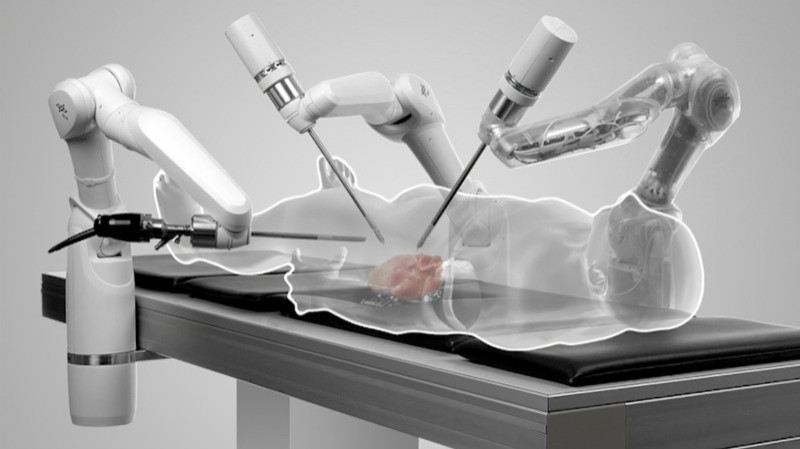
Robotic-Assisted Coronary Artery Bypass Grafting (Robotic-Assisted CABG)
Robotic-Assisted Coronary Artery Bypass Grafting (CABG) is a highly advanced, minimally invasive heart surgery performed using robotic technology. Unlike traditional open-heart bypass surgery—where the breastbone (sternum) is cut open—robotic CABG is performed through tiny keyhole-sized incisions between the ribs, without opening the chest.
This modern approach reduces surgical trauma, pain, bleeding, and recovery time, while still providing the same long-term survival and graft patency as conventional bypass surgery.
Robotic CABG is especially beneficial for carefully selected patients and is performed at specialized cardiac centers with dedicated robotic surgery programs.
How Robotic CABG Works
Robotic CABG uses a sophisticated robotic platform (such as the da Vinci Surgical System) that enhances the surgeon’s ability to perform complex, delicate heart procedures with unmatched precision.
Key Features of Robotic Technology:
- 3D high-definition magnified view of the heart
- Wristed instruments capable of movements beyond the human hand
- Micro-motions that eliminate natural hand tremors
- Accurate access to deep, narrow spaces between ribs
Step-by-Step Procedure
- Small Keyhole Incisions
Multiple tiny incisions (5–12 mm) are made between the ribs—no sternotomy, no large scars.
- Robotic Instrument Docking
Robotic arms hold specialized instruments and a 3D camera.
The surgeon controls these from a nearby console.
- Harvesting Internal Mammary Artery (IMA)
The surgeon carefully frees the Internal Mammary Artery using robotic precision—this artery has the best long-term results for bypass.
- Performing the Bypass
The IMA is grafted to the blocked coronary artery to restore blood flow to the heart muscle.
- Completing the Procedure
Instruments are removed, and the small incisions are closed with fine sutures.
Beating-Heart Robotic CABG
In selected patients, the heart continues beating during surgery, eliminating the need for a heart-lung machine.
This reduces inflammation, enhances recovery, and lowers complication risk.
When Robotic-Assisted CABG Is Recommended
Ideal candidates include patients with:
Single-vessel or double-vessel disease, especially involving the Left Anterior Descending (LAD) artery
Good heart function (LVEF adequate)
No severe lung disease or chest deformities
No major atherosclerosis in the aorta
Desire for a minimally invasive, fast-recovery option
Common Indications:
LAD blockage requiring LIMA–LAD graft
Multi-vessel disease where robotic harvesting is combined with hybrid CABG + stenting
Young patients wanting faster return to work
Cosmetic concerns regarding sternotomy scar
Situations where robotic CABG is NOT suitable:
Extensive coronary artery disease requiring multiple grafts
Severe lung or chest wall problems
Prior major left chest surgery
Very obese patients (relative contraindication)
Severe calcification in the arteries
Final suitability is determined through:
CT scan of the chest
Coronary angiography
Echocardiography
Pulmonary evaluation
Types of Robotic-Assisted CABG Approaches
1. Totally Endoscopic Coronary Artery Bypass (TECAB)
- Performed entirely through tiny ports
- No rib spreading
- Most advanced but available only in select centers
2. Minimally Invasive Direct Coronary Artery Bypass (MIDCAB) with Robotic Assistance
- Robotic harvesting + hand-sewn graft through a small incision
- Most commonly performed variant
3. Hybrid Coronary Revascularization
Combination of:
- Robotic LIMA–LAD graft
- Stents for remaining blockages
This provides:
- Best long-term outcomes
- Least surgical trauma
- Faster recovery
Advantages of Robotic-Assisted CABG
✔ No sternotomy (breastbone remains intact)
Greatly reduces pain and risk of complications.
✔ Minimal scarring
Tiny incisions hidden between ribs.
✔ Faster recovery
Full recovery in 2–3 weeks, compared to 6–8 weeks after open surgery.
✔ Lower infection risk
Especially beneficial for diabetics and elderly patients.
✔ Less bleeding
Less need for blood transfusion.
✔ Faster return to work and routine life
✔ Same long-term success as open CABG
LIMA–LAD graft patency remains excellent.
✔ Shorter hospital stay
✔ Superior precision and visibility
Robot’s 3D view significantly enhances surgical accuracy.
Recovery After Robotic CABG
Patients typically:
Spend 1–2 days in ICU
Stay 3–5 days in the hospital
Resume walking within 24 hours
Return home with minimal pain medication
Postoperative Care Includes:
Light walking and breathing exercises
Cardiac rehabilitation for stamina
Blood pressure, cholesterol, and clot-prevention medicines
Follow-up visits to monitor healing and graft flow
Wound care for tiny chest incisions
Return to normal life:
Routine work: 2–4 weeks
Driving: 2–3 weeks
Exercise: 4–6 weeks
Heavy lifting: 6–8 weeks
Long-Term Outcomes
Robotic CABG provides excellent long-term results, including:
High graft patency (especially LIMA–LAD)
Durable symptom relief
Reduced angina
Improved exercise tolerance
Lower risk of wound infections
Comparable survival to traditional CABG
Possible Risks and Complications
Although robotic CABG is safe, complications may include:
Bleeding
Wound infection (rare due to small incisions)
Heart rhythm disturbances (atrial fibrillation)
Graft narrowing (rare)
Lung-related discomfort
Need to convert to open surgery if required (very uncommon)
When performed by an experienced robotic cardiac team, the complication rate is extremely low.
Robotic CABG vs. Conventional CABG — Comparison Table
Feature | Robotic CABG | Conventional CABG |
Incision | Tiny keyholes | Full sternotomy |
Pain | Minimal | Moderate |
Hospital Stay | 3–5 days | 6–8 days |
Recovery Time | 2–3 weeks | 6–8 weeks |
Infection Risk | Low | Higher |
Blood Loss | Less | More |
Cosmetic Result | Excellent | Prominent scar |
Long-term Outcome | Same | Same |

MBBS, MS, MCh, FRCS-CTh,
FRCS-CTh(Ed), MEBCTS, FEBCTS, FACS(USA), DNB, MNAMS, MBA
Senior Consultant – Cardiothoracic & Vascular Surgery
National Heart Institute, New Delhi
Frequently Asked Questions
Is robotic CABG as effective as open-heart surgery?
Yes. The long-term graft success—especially for LIMA–LAD—is equally excellent in both techniques.
Will I need a heart-lung machine?
Not always. Many robotic CABG operations are performed on a beating heart, reducing risks and promoting faster recovery.
Is the robot doing the surgery by itself?
No. The surgeon is in full control at all times.
The robot only translates the surgeon’s hand movements with enhanced precision.
Is robotic CABG safe for elderly patients?
Yes, provided they meet selection criteria. The smaller incision reduces infection risk and speeds up recovery.
Will I have a big scar?
No. Only small keyhole incisions (5–12 mm) between the ribs are made.
Cosmetic results are significantly better than open surgery.
Can multiple blockages be treated with robotic CABG?
Yes, through hybrid procedures (robotic bypass + stents), providing complete revascularization with minimal trauma.
Is robotic surgery more expensive?
The initial cost may be higher, but shorter hospital stays and faster recovery often reduce overall expenses.
When can I return to office work?
Usually within 2–3 weeks, depending on the type of job.
What if there is a problem with the robot during surgery?
There are strict safety protocols, and the surgeon can instantly convert to conventional surgery if needed—though this is very rare.
For any queries on this topic
Mail to: drkeshriheartcare@gmail.com or Click Here For WhatsApp (Text msg Only):