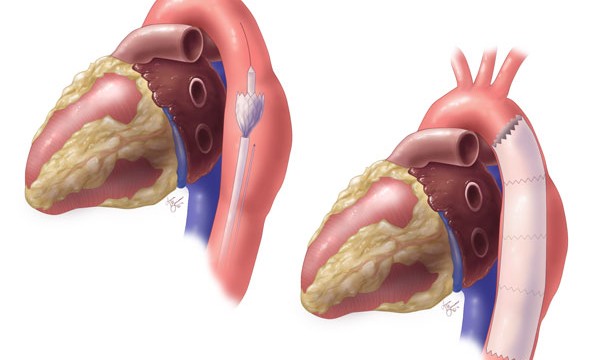
EVAR (Endovascular Aneurysm Repair) & TEVAR (Thoracic Endovascular Aortic Repair)
EVAR (Endovascular Aneurysm Repair) and TEVAR (Thoracic Endovascular Aortic Repair) are advanced, minimally invasive procedures used to treat dangerous bulges (aneurysms) in the aorta—the main blood vessel carrying blood from the heart to the entire body.
An aortic aneurysm occurs when a portion of the aortic wall weakens and balloons outward. If left untreated, this weakened area can rupture, causing massive internal bleeding and often instant death.
EVAR and TEVAR allow doctors to repair the aorta from inside the blood vessel using a stent graft, without the need for large chest or abdominal incisions.
These procedures have transformed aortic care, making treatment safer and more accessible for elderly and high-risk patients.
Difference Between EVAR and TEVAR
While both procedures use similar endovascular techniques, they differ mainly in location:
- EVAR (Endovascular Aneurysm Repair)
Used to treat aneurysms of the abdominal aorta, usually below the level of the kidneys.
- TEVAR (Thoracic Endovascular Aortic Repair)
Used to treat aneurysms or dissections in the thoracic (chest) portion of the aorta.
Both techniques involve placing a stent graft inside the diseased aorta to reinforce the weakened wall.
When Are EVAR and TEVAR Needed?
Doctors recommend EVAR or TEVAR for treating:
Abdominal Aortic Aneurysm (AAA)
Thoracic Aortic Aneurysm (TAA)
Aortic Dissection (tear in the aortic wall)
Traumatic Aortic Injury (accidents, blunt trauma)
Pseudoaneurysm after previous surgery or procedure
Rapidly enlarging aneurysms
Symptomatic aneurysms causing pain
Without timely treatment, large aortic aneurysms can rupture suddenly and are often fatal.
EVAR and TEVAR prevent this by sealing off the weakened portion and redirecting blood safely through the stent graft.
How Are EVAR and TEVAR Performed?
These procedures usually take place in a hybrid operation theatre equipped with high-resolution imaging.
1. Pre-Procedure Evaluation
- A detailed CT Angiogram maps the exact size, shape, and position of the aneurysm.
- Doctors assess:
- Vessel diameter
- Landing zones for the stent graft
- Kidney function
- Overall fitness for anesthesia
This step ensures accurate device selection and safe planning.
2. Accessing the Artery
- Under local or general anesthesia, two tiny incisions are made in the groin.
- Catheters are inserted through the femoral arteries and guided to the aneurysm using fluoroscopy (live X-rays).
3. Deploying the Stent Graft
- A fabric-covered metal stent (graft) is positioned across the aneurysm.
- Once deployed, it expands and anchors itself inside the aorta.
- Blood now flows through the stent, not the weakened aneurysm sac, preventing rupture.
4. Post-Procedure Monitoring
- The incisions are closed with stitches or glue.
- Patients are monitored for:
- Bleeding
- Kidney function
- Heart and lung status
- Graft position
- Most patients stay 1–3 days in the hospital.
Advantages of EVAR and TEVAR
Minimally invasive (no large chest or abdominal incision)
Less blood loss
Shorter hospital stay (2–3 days)
Faster recovery (1–2 weeks)
Lower risk of complications such as infection or respiratory distress
Suitable for elderly and high-risk individuals
Life-saving by preventing aneurysm rupture
Less pain and minimal scarring
In many cases, EVAR/TEVAR offer equivalent long-term outcomes compared to open surgery with far less physical trauma.
Recovery After EVAR & TEVAR
Most patients recover quickly due to the minimally invasive nature of the procedure.
Typical recovery timeline:
Hospital stay: 2–3 days
Return to routine activity: 1–2 weeks
Full recovery: 2–4 weeks
Postoperative care includes:
Regular CT scans or ultrasounds to ensure graft stability
Blood pressure control
Cholesterol management
Quitting smoking (critical for aortic health)
Avoiding lifting heavy weights for 4–6 weeks
Good long-term control of blood pressure significantly reduces future complications.
Potential Risks and Complications
Although EVAR and TEVAR are safe, some complications may occur:
Endoleak (blood leakage around the graft)
Movement or blockage of the stent graft
Infection
Kidney injury (due to contrast dye)
Limb ischemia (reduced blood flow to legs)
Groin hematoma or bleeding
Very rarely: Graft rupture or failure
Regular follow-up imaging ensures early detection and correction.
EVAR & TEVAR vs. Open Aortic Surgery
Feature | EVAR/TEVAR | Open Surgery |
Incision Type | Small groin incisions | Large chest/abdominal incision |
Anesthesia | Local or General | General |
Recovery Time | 1–2 weeks | 6–8 weeks |
Hospital Stay | 2–3 days | 7–10 days |
Suitability | Elderly/high-risk patients | Younger/low-risk patients |
Blood Loss | Minimal | Significant |
Conclusion:
EVAR and TEVAR provide excellent long-term protection against aneurysm rupture with far less trauma and faster recovery—making them preferred options in most cases.

MBBS, MS, MCh, FRCS-CTh,
FRCS-CTh(Ed), MEBCTS, FEBCTS, FACS(USA), DNB, MNAMS, MBA
Senior Consultant – Cardiothoracic & Vascular Surgery
National Heart Institute, New Delhi
Frequently Asked Questions
How long do EVAR and TEVAR stent grafts last?
Modern stent grafts are highly durable and often last 15–20 years or more, with regular surveillance.
Will I need lifelong follow-up after EVAR/TEVAR?
Yes.
Annual CT scans or ultrasounds are essential to monitor graft integrity and detect endoleaks early.
Is EVAR/TEVAR painful?
Pain is minimal. Most patients experience only mild groin discomfort for a few days.
Can I walk immediately after the procedure?
Yes.
Most patients begin walking the same day or next day, which helps prevent clots and speeds recovery.
Who is not suitable for EVAR/TEVAR?
Patients with:
- Very tortuous aorta
- Inadequate landing zones
- Very small, calcified, or blocked femoral arteries
may be better candidates for hybrid or open surgery.
Do EVAR and TEVAR cure the aneurysm?
They exclude the aneurysm from blood flow, preventing rupture.
However, surveillance is still needed to ensure continued stability.
Are these procedures available everywhere?
No.
EVAR and TEVAR require:
- A hybrid OR
- Advanced imaging
- Skilled endovascular and aortic specialists
Only specialized cardiac and vascular centers offer them.
For any queries on this topic
Mail to: drkeshriheartcare@gmail.com or Click Here For WhatsApp (Text msg Only):