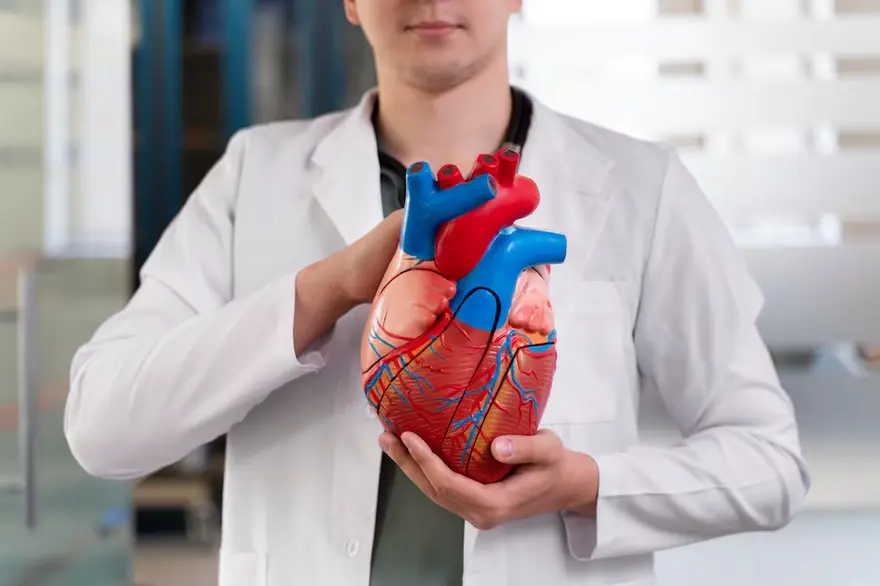
Ventricular Septal Ruptures
A Ventricular Septal Rupture (VSR) is a rare but extremely serious heart emergency. It occurs when a tear develops in the wall (septum) that separates the heart’s two lower chambers — the left ventricle and the right ventricle.
This rupture most often happens 2–7 days after a severe heart attack, when the damaged heart muscle becomes weak and breaks open.
Because of the hole in the septum, oxygen-rich blood from the left ventricle suddenly flows into the oxygen-poor bloodof the right ventricle. This causes:
Severe strain on the heart
Drop in blood pressure
Sudden heart failure
Rapid progression to cardiogenic shock
Without urgent intervention, VSR can be fatal within hours to days, making it one of the most feared complications of a heart attack.
Causes of Ventricular Septal Rupture
1. Large Heart Attack (Most Common Cause)
A major myocardial infarction causes a portion of the heart muscle to die due to lack of blood supply. This dead tissue weakens and may tear, creating a hole in the septum.
VSR is more likely when:
The heart attack was untreated, or treatment was delayed
No primary angioplasty (PCI) or thrombolysis was done in time
The heart attack involved the front or bottom wall of the heart
2. Less Common Causes
Although rare, VSR can also occur due to:
Severe chest trauma
Complications during cardiac surgery
Infective endocarditis (infection damaging heart tissue)
Congenital muscle weakness of the septum
Symptoms of Ventricular Septal Rupture
Symptoms appear suddenly and worsen very quickly. Common warning signs include:
Severe breathlessness
Sudden chest pain
Extreme fatigue or collapse
Rapid heart rate (tachycardia)
Very low blood pressure (shock)
A new loud heart murmur heard during examination
Signs of heart failure:
– Leg swelling
– Fluid in lungs
– Poor urine output
If untreated, VSR rapidly progresses to cardiogenic shock, multiple organ failure, and death.
How VSR Is Diagnosed
Early diagnosis saves lives. The following tests are essential:
1. Echocardiography (ECHO) — The Most Important Test
- Visualizes the exact size and location of the hole
- Shows abnormal blood flow between ventricles
- Assesses how seriously the heart is failing
2. ECG
- Detects signs of the heart attack that caused the rupture
- Shows rhythm disturbances
3. Cardiac Catheterization
- Measures pressure differences in heart chambers
- Helps plan surgery
4. Chest X-ray
- Shows lung congestion or enlarged heart
Emergency Management and Treatment
Treatment must begin immediately.
1. Stabilization (First Step)
Oxygen therapy
IV fluids and medications to support blood pressure
Inotropes to help the heart pump
Diuretics to reduce lung congestion
Intra-aortic balloon pump (IABP) or ECMO in critical patients
Mechanical support helps stabilize the patient until surgery can be performed safely.
2. Surgical Repair — The Definitive and Only Life-Saving Treatment
Emergency surgery is the gold standard treatment for VSR.
During surgery:
The chest is opened
The heart is placed on a heart-lung machine
The rupture is repaired with a surgical patch
Blood flow is restored to normal
Early surgery saves lives, even though the patient may be very sick.
Delaying surgery significantly increases the risk of death.
3. Medical Support Until Surgery
Medications may temporarily support heart function:
Vasodilators
Inotropes
Diuretics
Pain control
Treatment of the underlying heart attack (angioplasty, stents if needed)
However, medicines alone cannot cure VSR. Surgery is essential.
Modern Treatments for Ventricular Septal Rupture (VSR)
1. Device Closure of VSR (Transcatheter Approach)
In selected patients, especially those who are too sick for immediate open-heart surgery, a device-based (transcatheter) closure can be performed.
This procedure is done through the blood vessels without opening the chest.
How it Works
A catheter is inserted through the femoral vein or artery.
Using imaging guidance, a special VSD occluder device is positioned across the rupture.
The device expands to plug the hole and stops the abnormal blood flow.
Benefits
Minimally invasive
Useful in unstable patients or those not suitable for surgery
Can be lifesaving as a temporary or permanent solution
Shorter recovery time
Limitations
Not suitable for very large or freshly ruptured VSRs
Sometimes used as a bridge therapy before surgery
2. Hybrid Repair of VSR
Hybrid repair combines open-heart surgical techniques with catheter-based interventions in a single session inside a hybrid operating room.
How it Works
Surgeons may partially open the heart and place a patch over the rupture.
At the same time, interventional cardiologists deploy a device or stent from within the heart to strengthen the repair.
Both techniques complement each other to reduce leakage and improve long-term outcomes.
Benefits
Ideal for complex or recurrent VSRs
Reduces surgical stress on weak heart tissue
Ensures a more secure closure in difficult cases
Especially useful in elderly or high-risk patients
Complications of Ventricular Septal Rupture
If not treated promptly, VSR can cause:
Cardiogenic shock
Severe heart failure
Multi-organ failure
Arrhythmias (irregular heart rhythm)
Sudden death
Even after surgery, rare complications include:
Residual or recurrent VSR
Low cardiac output
Postoperative arrhythmias
Close ICU monitoring is essential.
Prognosis and Recovery
The outcome depends on:
How early the rupture is detected
The patient’s age
Size and location of the rupture
How quickly surgery is performed
With early diagnosis and rapid surgical repair, many patients make a good recovery and resume normal life over time.
Rehabilitation includes:
Gradual increase in physical activity
Cardiac rehabilitation
Strict control of blood pressure, diabetes, and cholesterol
Healthy diet and lifestyle changes
Regular follow-up with a cardiac surgeon and cardiologist

MBBS, MS, MCh, FRCS-CTh,
FRCS-CTh(Ed), MEBCTS, FEBCTS, FACS(USA), DNB, MNAMS, MBA
Senior Consultant – Cardiothoracic & Vascular Surgery
National Heart Institute, New Delhi
Frequently Asked Questions
Can VSR heal on its own?
No. A VSR cannot close on its own. Surgery is the only definitive treatment.
How soon does VSR occur after a heart attack?
It typically occurs 2–7 days after a large heart attack, but can happen sooner or later in some cases.
Is surgery risky?
Yes — but not operating is far riskier. Early surgery gives the best chance of survival.
Why do patients with VSR often go into shock?
Because blood starts flowing abnormally between the ventricles, reducing oxygen supply to the body.
Can a patient recover fully after VSR surgery?
Many do, especially with timely surgery, good rehabilitation, and control of heart risk factors.
Can VSR be prevented?
The best prevention is prompt treatment of heart attacks with angioplasty or clot-busting medicines.
How common is VSR?
It is rare (1–2% of heart attack patients), but when it occurs, it is extremely dangerous.
What support devices may be needed before surgery?
IABP, ventilator support, ECMO, or inotropes may be required depending on stability.
For any queries on this topic
Mail to: drkeshriheartcare@gmail.com or Click Here For WhatsApp (Text msg Only):