Cardiac Trauma
Cardiac trauma refers to any injury to the heart or the structures surrounding it. These injuries may result from blunt force (such as road accidents) or penetrating injuries (such as knife or gunshot wounds). Cardiac trauma is a medical emergency and can lead to life-threatening complications like severe bleeding, shock, cardiac tamponade, arrhythmias, or cardiac arrest.
Timely diagnosis and immediate treatment greatly increase the chances of survival.
What Is Cardiac Trauma?
Cardiac trauma includes any form of physical damage to:
Heart muscle
Heart chambers
Heart valves
Coronary arteries
Pericardium (heart covering)
The injury may be external, such as a violent impact on the chest, or internal, as a complication during medical procedures like catheter insertion, device implantation, or cardiac surgery.
Depending on the severity, cardiac trauma may lead to:
Heart failure
Abnormal heart rhythm
Severe blood loss
Reduced cardiac output
Sudden death
Types of Cardiac Trauma
1. Blunt Cardiac Trauma
Occurs when the chest is hit by a strong force—common in:
- Vehicle accidents
- Falls
- Sports injuries
- Industrial accidents
It may cause:
- Heart contusion (bruising)
- Rupture of heart chambers
- Injury to coronary arteries
- Commotio cordis (sudden cardiac arrest caused by a forceful impact during a vulnerable moment in the heartbeat)
2. Penetrating Cardiac Trauma
Occurs when a sharp object directly injures the heart, such as:
- Knife wounds
- Gunshots
- Shrapnel injuries
These injuries often cause:
- Cardiac tamponade, where blood collects around the heart and compresses it
- Severe internal bleeding
- Immediate circulatory collapse
3. Iatrogenic Cardiac Trauma
This occurs during medical procedures, such as:
- Pacemaker or ICD lead insertion
- Catheterization
- Valve interventions
- Central line insertion (rare)
Although uncommon, these injuries can cause perforation or bleeding that needs urgent correction.
Causes of Cardiac Trauma
The most frequent causes include:
Road traffic accidents
Stab or gunshot injuries
Severe chest compression
Industrial and workplace accidents
Sports injuries (especially cricket, baseball)
Complications during heart procedures
Symptoms of Cardiac Trauma
Symptoms vary depending on the extent and type of heart injury.
Common warning signs include:
Chest pain or heaviness
Difficulty breathing
Weak, rapid, or irregular pulse
Very low blood pressure (shock)
Enlarged neck veins (a sign of tamponade)
Extreme weakness or restlessness
Fainting or sudden collapse
Bluish skin (due to lack of oxygen)
Any patient with chest trauma plus these symptoms should be treated as an emergency.
Diagnosis of Cardiac Trauma
Early diagnosis saves lives. Doctors use multiple tests to evaluate the heart:
1. ECG (Electrocardiogram)
Checks for arrhythmias, conduction blocks, and heart muscle injury.
2. Echocardiography (ECHO)
Identifies blood accumulation, chamber rupture, valve injuries, or wall motion abnormalities.
3. Chest X-ray
Shows rib fractures, foreign bodies, or an enlarged heart silhouette.
4. CT Scan
Provides detailed imaging of the chest, heart, pericardium, and great vessels.
5. Pericardiocentesis
Helps diagnose and relieve cardiac tamponade by removing accumulated blood.
Emergency Management and Treatment
1. Immediate Stabilization
- Ensure airway and breathing
- Provide oxygen
- Manage shock with IV fluids
- Place the patient on continuous heart monitoring
2. Control of Bleeding
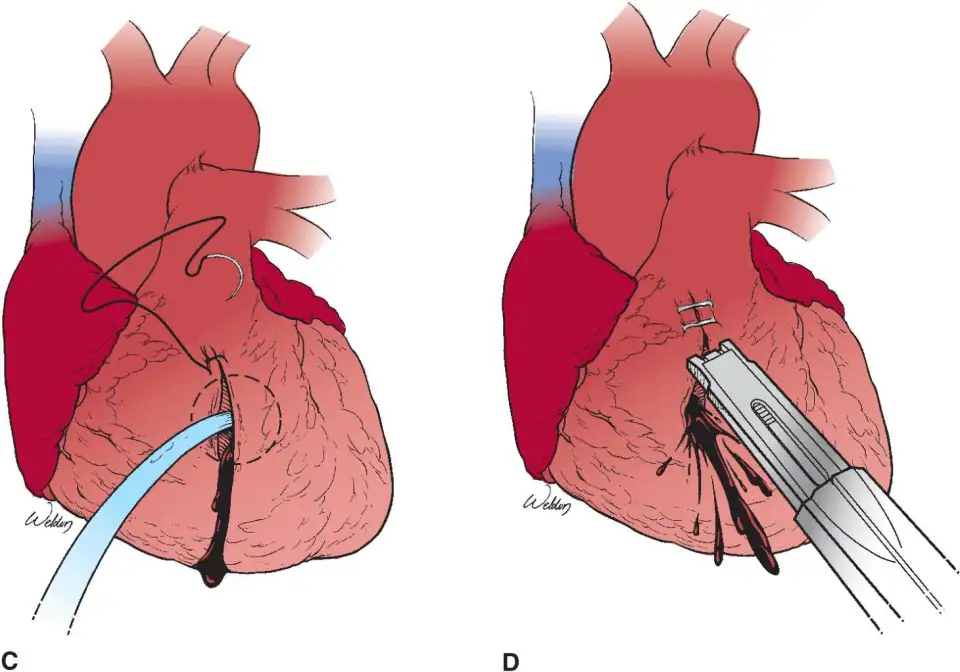
In penetrating injuries, stopping internal and external bleeding is the first priority.
Surgical exploration is often required.
3. Surgical Treatment
Emergency surgery may be needed to:
- Repair heart chamber tears
- Close vessel injuries
- Remove blood from the pericardium
- Control hemorrhage
- Repair valve or coronary artery injury
Procedures such as thoracotomy or pericardiotomy may be life-saving.
4. Medical Management
- Medications to stabilize rhythm
- Drugs to maintain blood pressure
- Antibiotics for infected wounds
- Blood transfusions if needed
Complications of Cardiac Trauma
If untreated, cardiac trauma can lead to:
Cardiac tamponade
Severe internal bleeding
Heart chamber rupture
Dangerous arrhythmias
Heart failure
Sudden cardiac death
Even after successful treatment, long-term monitoring is required to check for:
Late arrhythmias
Heart muscle weakness
Scarring
Pericardial problems
Prognosis and Recovery
Outcome depends heavily on:
The severity of injury
Time taken to reach medical care
Immediate access to surgical intervention
Patients who receive rapid diagnosis and timely surgery typically recover well and may regain normal heart function.
Early treatment can be the difference between life and death.

MBBS, MS, MCh, FRCS-CTh,
FRCS-CTh(Ed), MEBCTS, FEBCTS, FACS(USA), DNB, MNAMS, MBA
Senior Consultant – Cardiothoracic & Vascular Surgery
National Heart Institute, New Delhi
For any queries on this topic
Mail to: drkeshriheartcare@gmail.com or Click Here For WhatsApp (Text msg Only):